Aquascaping has evolved into a genuine art form with distinct schools of design. The three most influential are the Nature Aquarium style (and its purest expression, Iwagumi), and the Dutch style. Knowing the difference helps you communicate what you want — and helps us design the right scape for your space.
01Nature Aquarium Style
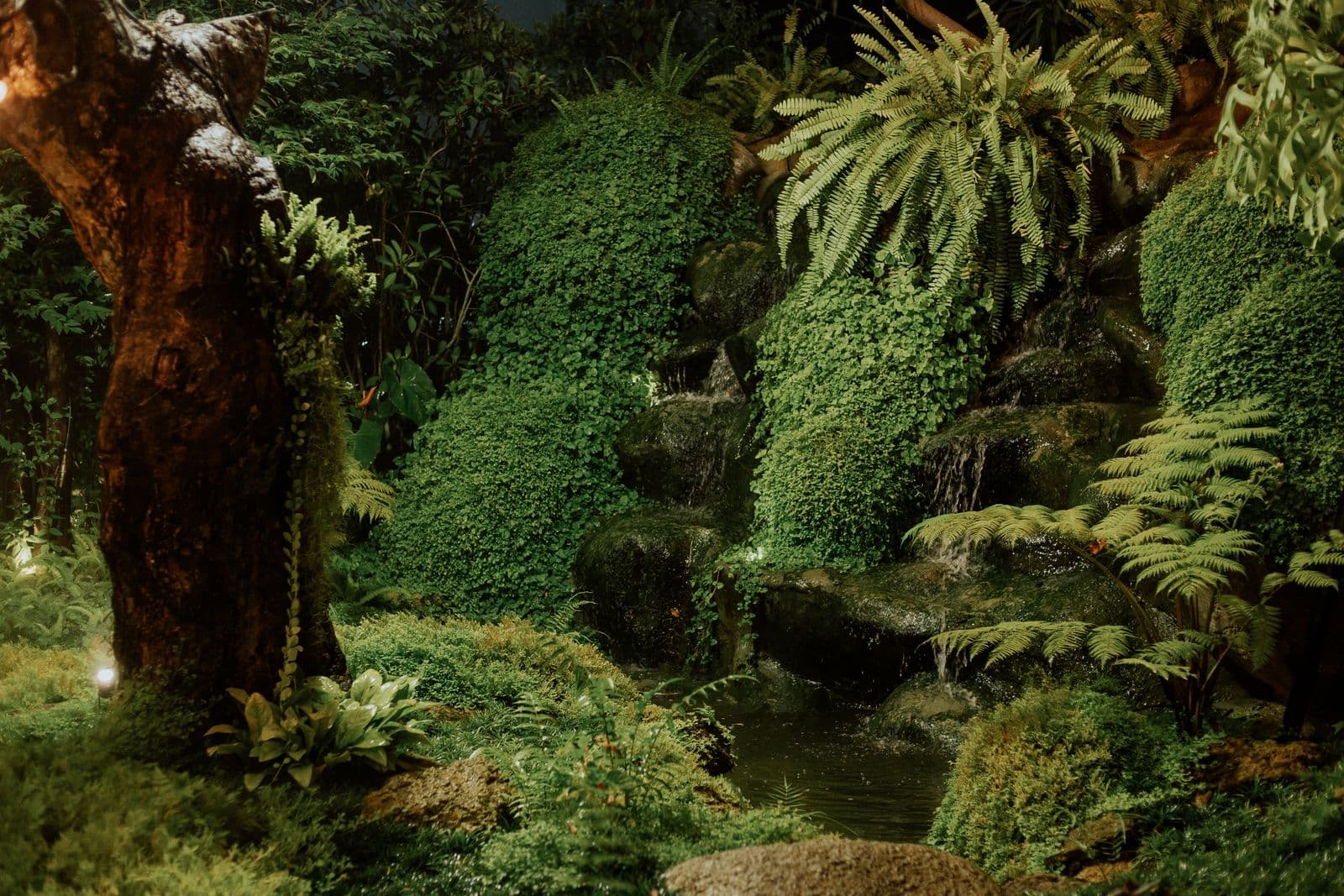
Developed by the legendary Takashi Amano in the 1980s, the Nature Aquarium style attempts to recreate natural landscapes — forests, mountains, valleys, riverbeds — inside a glass box. It draws heavily from Japanese aesthetic principles: asymmetry, negative space, depth, and the idea that beauty lies in incompleteness (wabi-sabi).
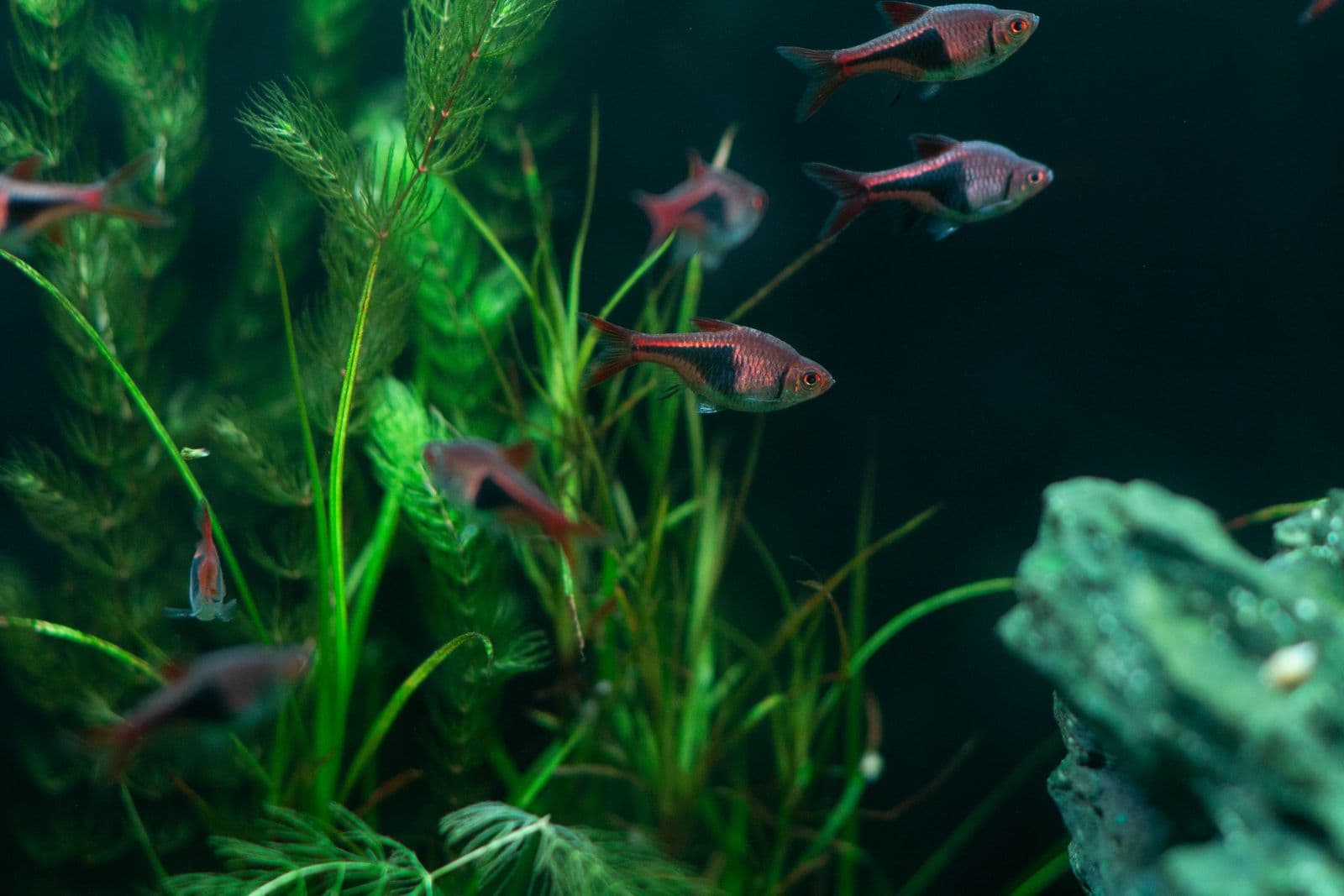
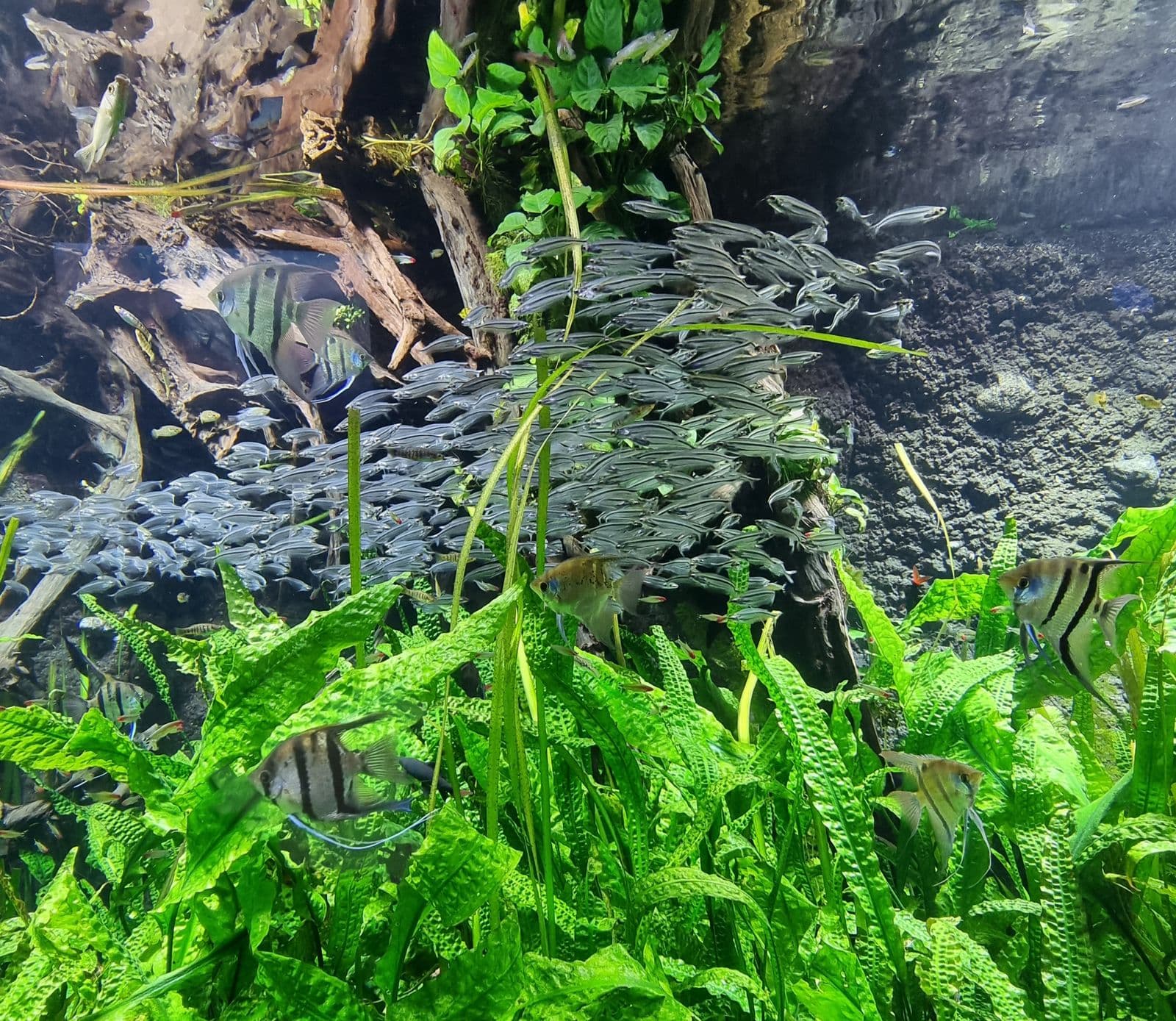
A Nature Aquarium typically features: - A mix of hardscape (rocks or driftwood) as the focal point - Carpeting plants in the foreground, tall plants in the background - An intentional focal point (usually off-centre, following the golden ratio) - Open 'breathing room' in the midground - Small schooling fish like rasboras or tetras to add movement
Difficulty: Medium. Requires CO₂ and regular maintenance but is achievable with guidance.
Best for: Anyone who wants a dramatic, landscape-style tank with visual depth. Works beautifully as a living wall art piece.
💧 Quick Tips
- 1The rule of thirds applies here — place your main hardscape at roughly ⅓ or ⅔ across the tank.
- 2Use fish that swim in schools — they add a sense of scale and movement that solo fish can't.
- 3Avoid mixing too many plant species — restraint is a core principle of Japanese aesthetics.
02Iwagumi Style
Iwagumi (岩組) literally means 'rock formation' in Japanese. It is the purest, most minimalist branch of the Nature Aquarium school — typically just rocks and a single carpet plant species. No driftwood, no tall background plants. Just stone, carpeting grass, and negative space.
The most famous Iwagumi rock arrangement is the 'Sanzon Iwagumi' — three rocks representing a Buddhist trinity, with one main 'Oyaishi' stone flanked by two smaller supporting stones at specific angles.
Difficulty: Hard. The minimalism means there is nowhere to hide mistakes. Carpet plants require high light, CO₂, and precise nutrient dosing. Very small errors are immediately visible.
Best for: Clients who want something truly striking and are committed to premium maintenance. Often the centrepiece of a luxury home or executive office.
03Dutch Style
While Japan was developing the Nature Aquarium aesthetic, the Netherlands had its own long tradition of planted aquariums — the Dutch style. Developed from the 1930s onwards, Dutch aquascaping is fundamentally different: it is a garden, not a landscape.
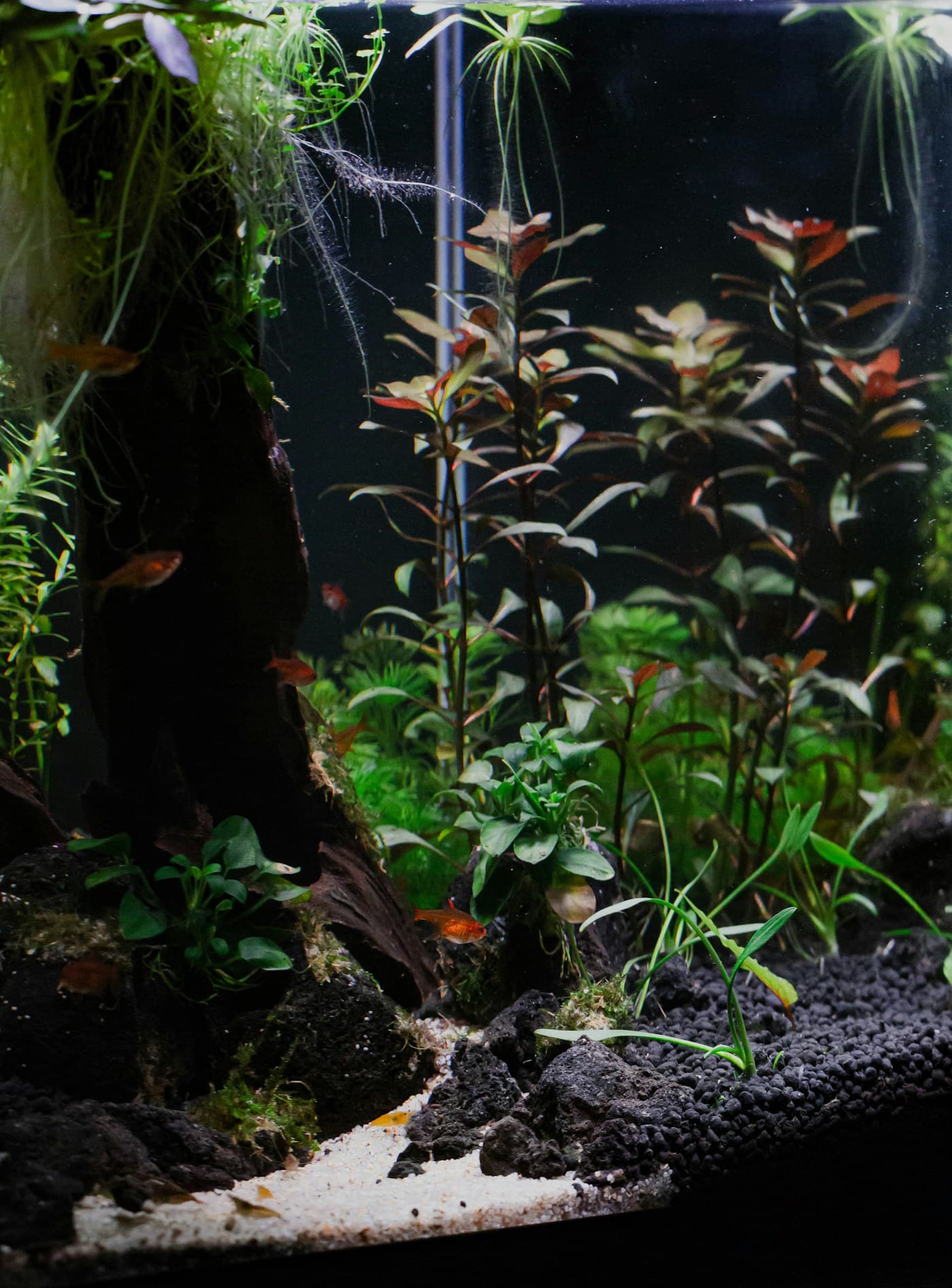
A Dutch aquarium features: - Organised 'rows' or 'streets' of different plant species - Maximum plant variety and colour contrast - No exposed substrate — every centimetre covered by plants - Red, green, and pink plants arranged for colour harmony - Typically no hardscape (or minimal)
The result looks like an underwater flower garden — dense, colourful, and incredibly lush.
Difficulty: Hard to expert. The challenge is managing many different plants simultaneously, each with different growth rates, light needs and care requirements. Water chemistry must be very precise.
Best for: Plant enthusiasts who love variety. Also extremely visually impressive for large corporate spaces where you want maximum visual impact.
💧 Quick Tips
- 1Dutch tanks rely on high light and CO₂ — there are very few low-tech Dutch scapes that look correct.
- 2Red plants (like Alternanthera reineckii) require the most light and make a powerful visual contrast.
- 3Trimming discipline is essential — Dutch tanks need weekly shaping to maintain clean 'street' lines.
04How to Choose: A Quick Guide
Choose Nature Aquarium if: You want a landscape scene with a natural, Japanese-inspired feel. You're open to CO₂ and moderate maintenance.
Choose Iwagumi if: You want maximum impact with minimum visual noise. You're in a premium space (luxury apartment, executive office) and want something architecturally powerful. You're committed to excellent maintenance.
Choose Dutch if: You love variety and colour. You want your tank to look like an exotic underwater garden. You enjoy the hobby aspect of managing many plant species.
Not sure? That's exactly what our Design Consultation is for. Book a free session and we'll look at your space, your aesthetic, and your commitment level — and recommend the right style for you.
Final Thoughts
There is no 'best' aquascaping style — only the right one for your space and your lifestyle. The Nature Aquarium style is what most of our clients choose, but we design and maintain all three styles with equal expertise. If you're based in Gurugram, book a free consultation and let's discuss what works for your home or office.