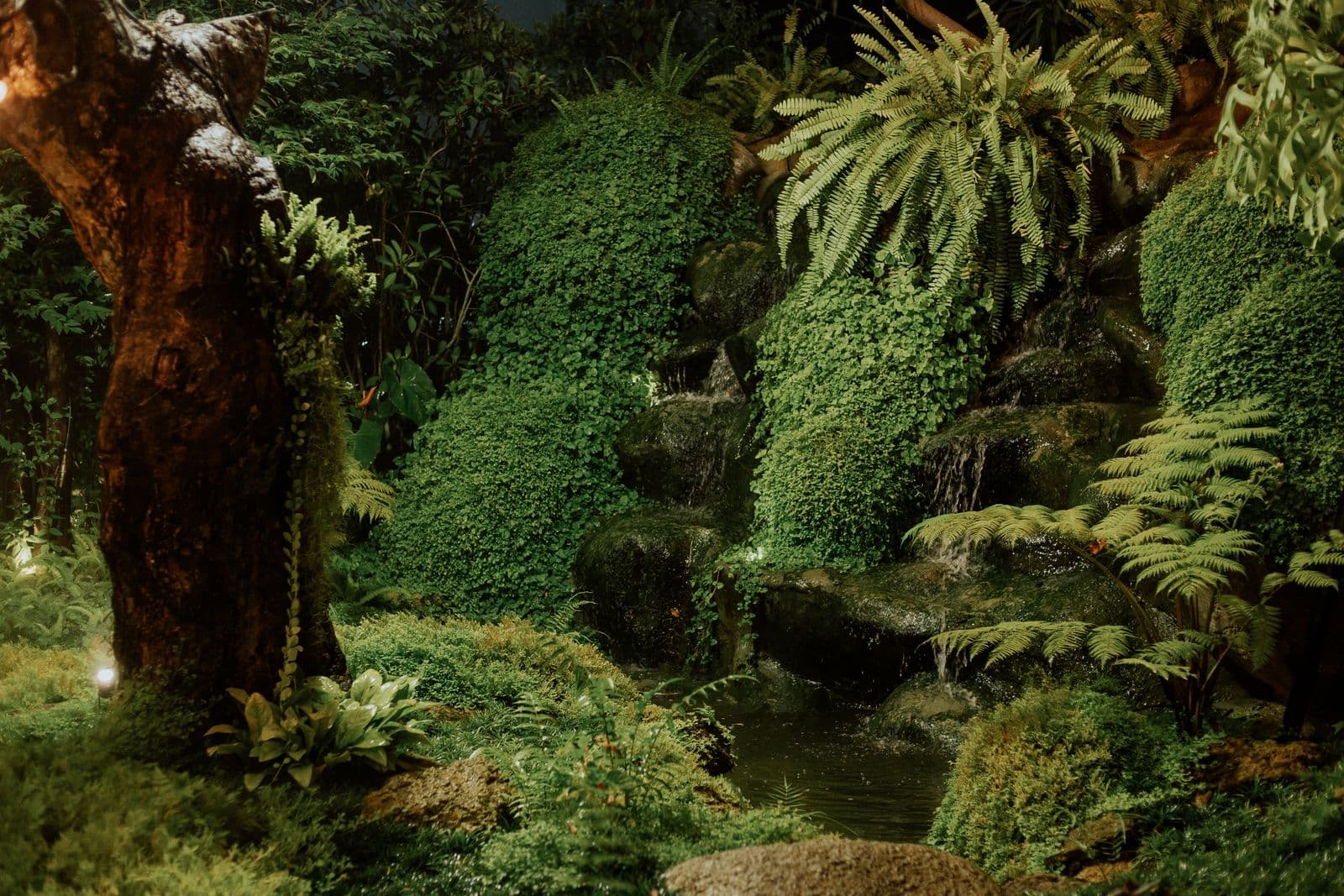
A paludarium (from the Latin 'palus' — marsh) is a terrarium that contains both aquatic and terrestrial elements. At its most dramatic, it recreates a tropical riverbank or rainforest floor: water cascading over mossy rocks, aquatic plants below the waterline, and tropical plants, ferns, and bromeliads growing above. Nothing else creates the same sense of a living, breathing ecosystem.
01How a Paludarium is Structured
A paludarium is divided into two or three zones:
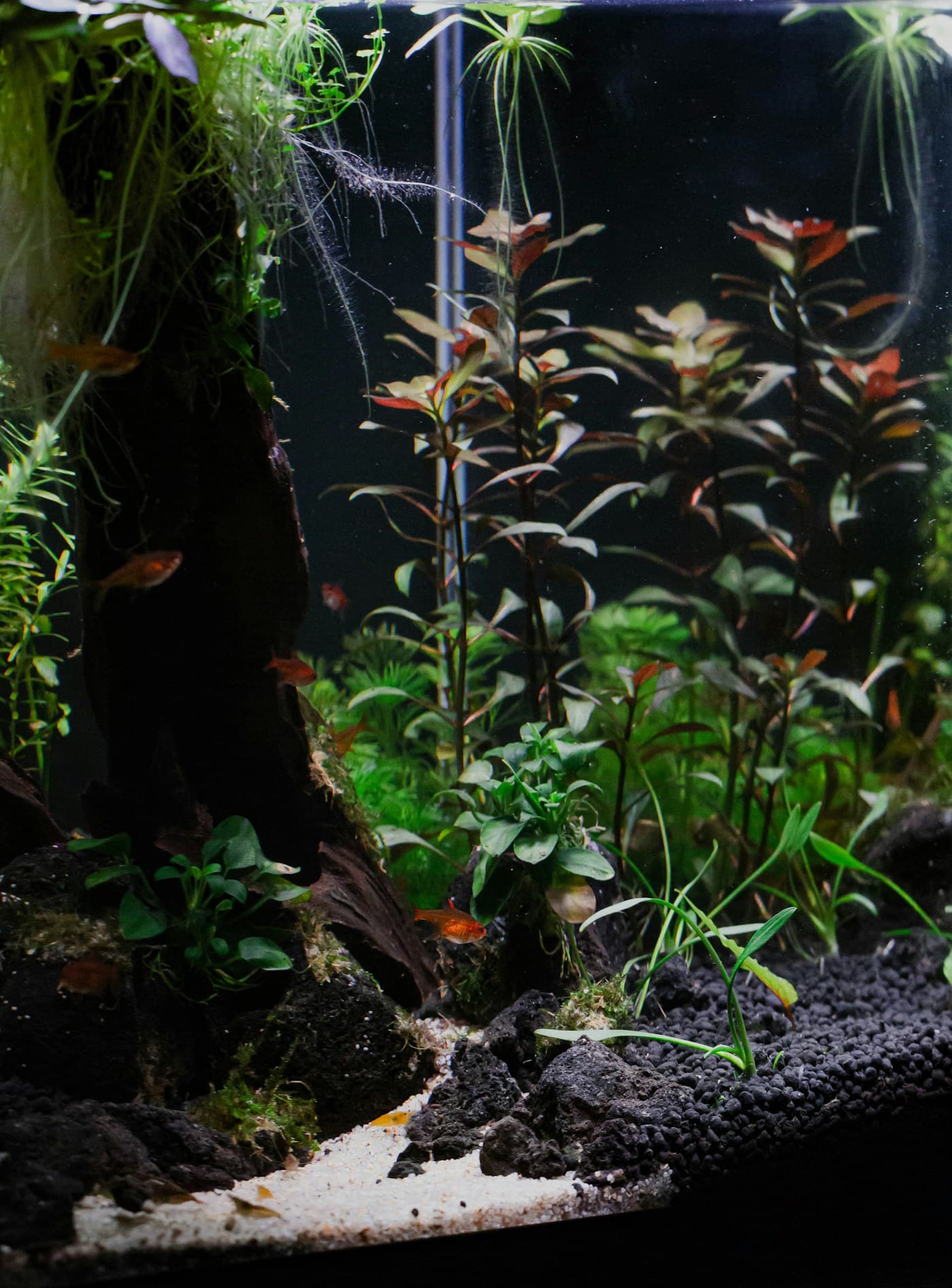
Aquatic Zone (bottom) — The water section, housing fish, shrimp, aquatic plants, and often a waterfall pump that circulates water up to the terrestrial zone.
Riparian Zone (middle) — The transition area between water and land. Often where the most dramatic planting happens — emergent aquatic plants, roots growing into the water, and shoreline mosses.
Terrestrial Zone (top) — The 'dry land' section filled with tropical plants, epiphytes (plants that grow on other plants, like bromeliads and orchids), mosses, and hardscape features like rocks and driftwood.
The water is continuously recirculated via a hidden pump, so the waterfall or stream is permanent — it's not a static display.
💧 Quick Tips
- 1The ratio of water to land is up to you — some paludariums are 70% aquatic, others are 70% terrestrial.
- 2Use a tall, front-opening tank for a paludarium — access to the terrestrial zone is important for trimming.
- 3Beginner-friendly paludariums focus on the aquatic section with just a small raised land area of moss.
02Best Plants for a Paludarium
Aquatic zone: Java Moss, Anubias, Bucephalandra, Mini Bolbitis, Eleocharis (hairgrass). These tolerate the constant humidity and changing water levels.
Riparian zone: Creeping Jenny (Lysimachia), Hydrocotyle tripartita, Pothos (highly adaptable), mini Monstera. Roots should be able to reach the water.
Terrestrial zone: Fittonia, Peperomia, Orchids, miniature Philodendrons, Tillandsia (air plants), Selaginella (spikemoss), various Ficus species.
For mosses: Java Moss works in the aquatic zone; Cushion Moss, Mood Moss and Sheet Moss are perfect for the terrestrial areas.
💧 Quick Tips
- 1Pothos is one of the most versatile paludarium plants — its roots can grow into the water and the vine can trail across the terrestrial section.
- 2Avoid plants that need dry periods (succulents, cacti) — paludariums are permanently humid.
- 3Bromeliads add dramatic colour to the upper terrestrial zone and need no substrate — just wedge them into crevices in the hardscape.
03Inhabitants: Fish, Shrimp & More
Paludariums open up a fascinating range of inhabitants:
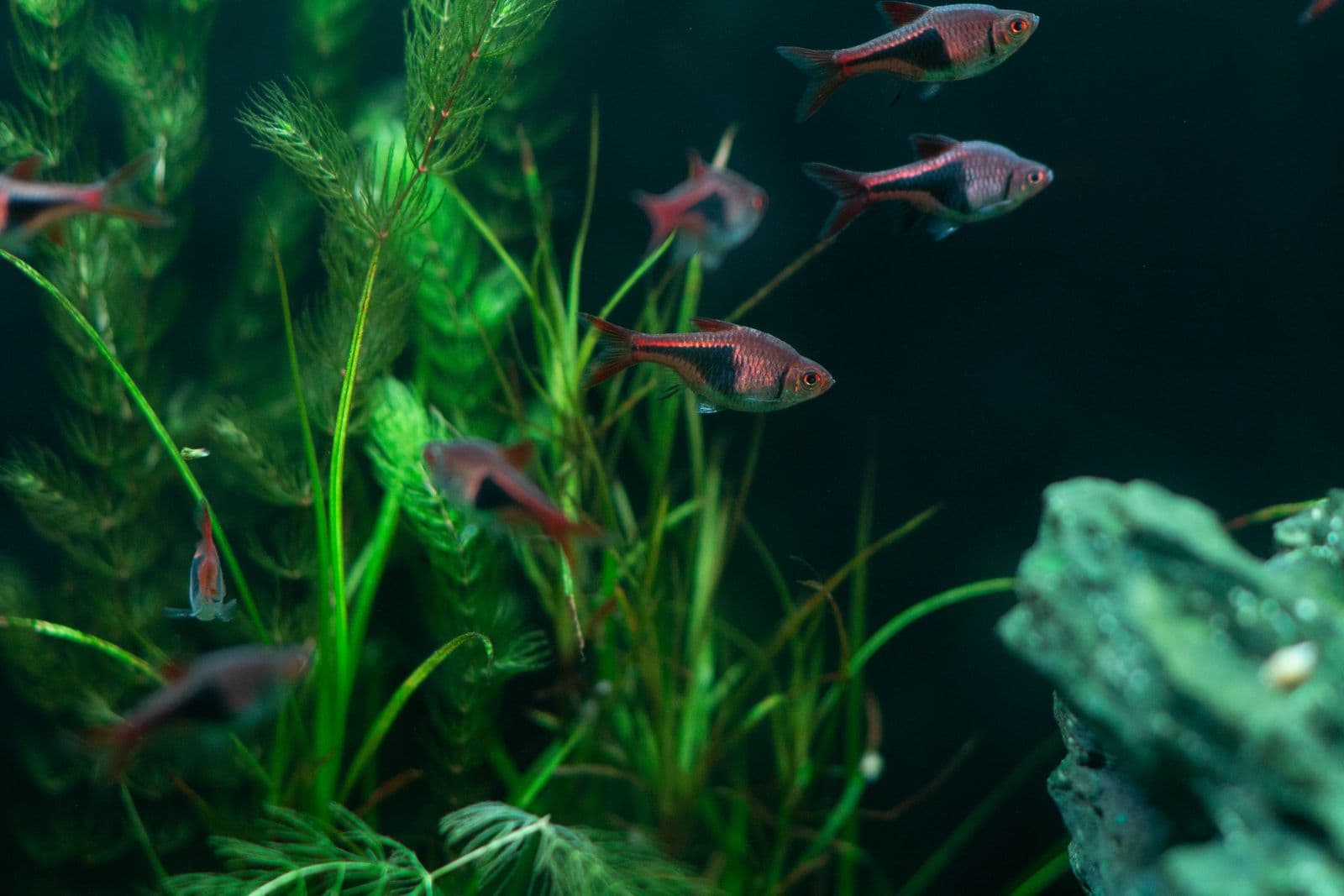
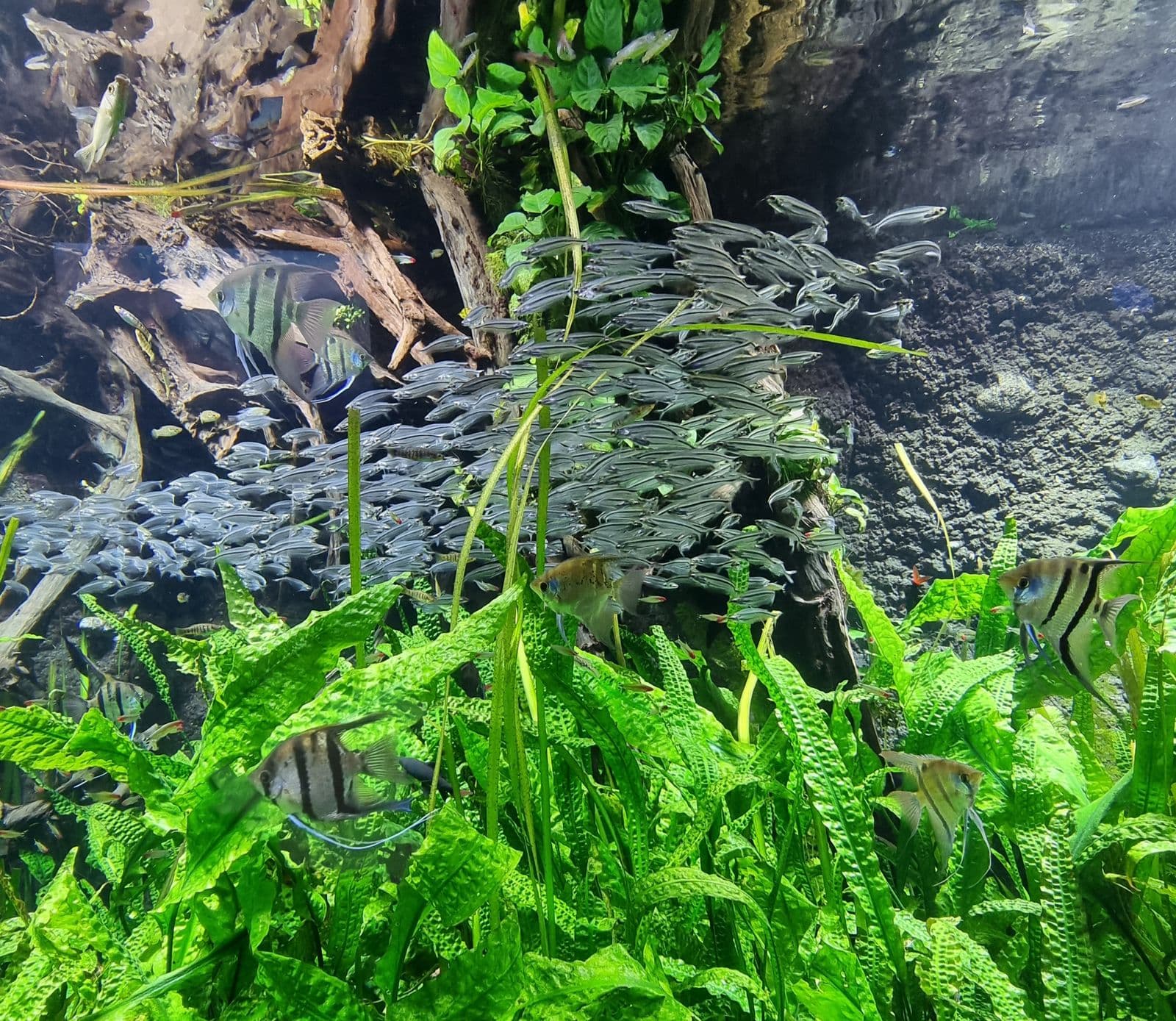
Fish: Small tropical species suit the aquatic zone perfectly — Endlers Livebearers, Celestial Pearl Danio, Chili Rasboras. Avoid large or boisterous fish.
Shrimp: Neocaridina shrimp (cherry shrimp) are ideal — they're peaceful, algae-grazing, and incredibly decorative.
Amphibians: The terrestrial zone can house small frogs (Dart frogs in large setups, Tree frogs in tall builds) or newts that transition between zones naturally.
Reptiles: Geckos and small skinks in larger terrestrial builds. Humidity must match the species requirements.
Note: Mixing species requires careful research. Never mix animals that would eat each other.
04Maintenance: What to Expect
A paludarium requires more regular attention than a standard aquarium but less than you might expect once established:
Weekly: Check water level (evaporation is high due to the open top and waterfall), top up with dechlorinated water. Remove any yellowing plant material.
Fortnightly: Clean the pump intake and check the waterfall flow rate. Mist the terrestrial section if humidity looks low.
Monthly: Full water change in the aquatic section (20–30%). Trim terrestrial plants that are growing into the aquatic zone. Clean the front glass of any hard water marks.
Our maintenance service covers paludariums on the same schedules as standard aquariums — just let us know what you have.
Final Thoughts
A paludarium is one of the most visually stunning displays you can have in a home or office — and far more achievable than most people think. We've built paludariums ranging from 30cm desktop pieces to room-dividing builds over 1.5 metres tall. If you're curious about a paludarium for your space, book a free consultation and let's see what's possible.