A terrarium is a glass-enclosed garden — a miniature ecosystem you can hold in your hands or display on a shelf. They're one of the most popular décor pieces we create, because they're beautiful, long-lasting, and practically maintenance-free once established correctly. Here's how they work and what makes a great one.
01Closed vs Open Terrariums
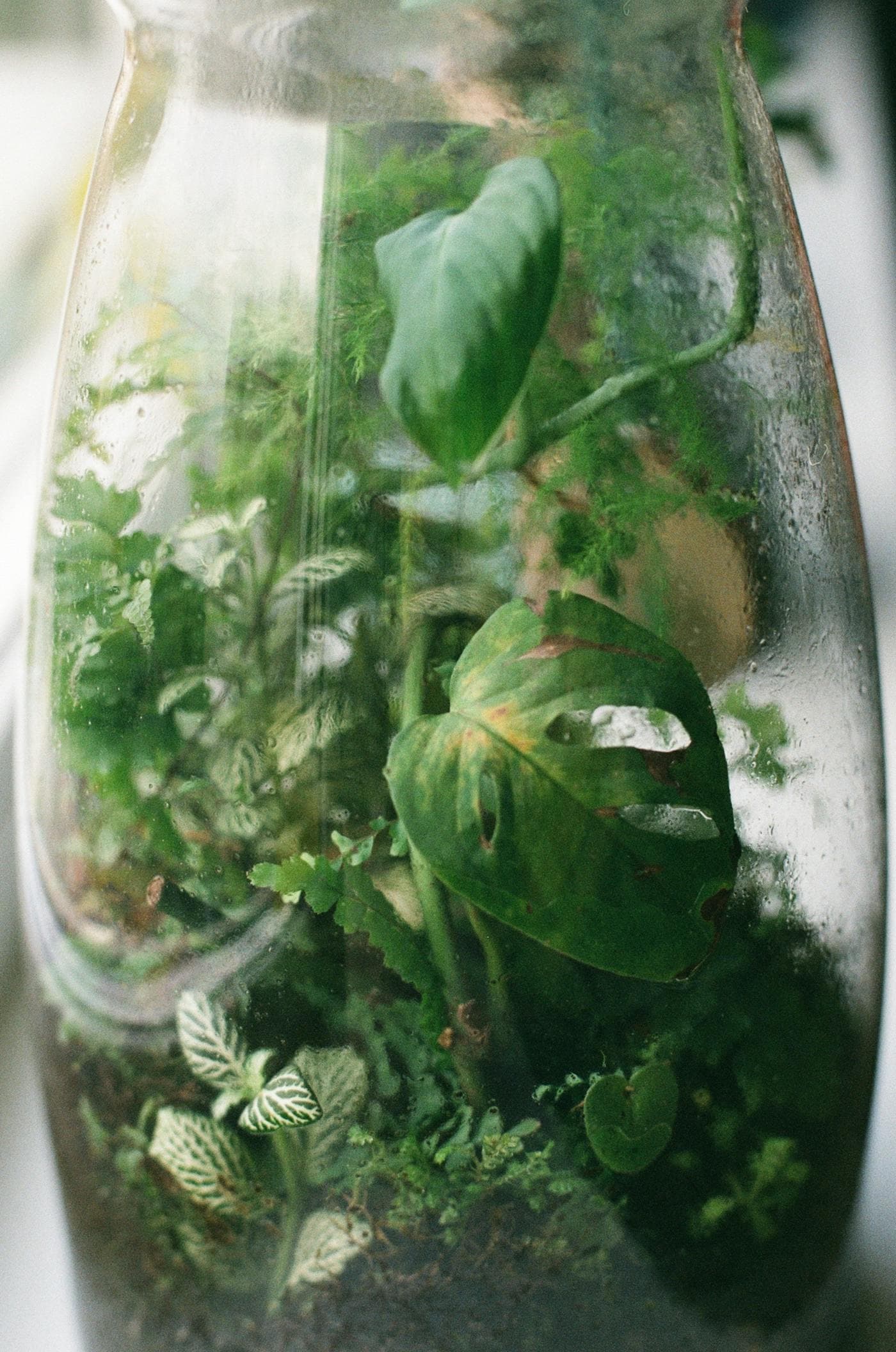
Closed terrariums have a lid or sealed opening. The moisture inside the enclosure cycles — plants transpire water vapour, which condenses on the glass walls and drips back to the substrate. Once established, a closed terrarium can go weeks or months without watering. They're ideal for moisture-loving plants like ferns, mosses, and tropical species.
Open terrariums have no lid or a partially open top. They lose moisture to the air and require more regular watering. However, they support a wider range of plants including succulents and air plants (Tillandsia) which would rot in a closed environment.
For gifting and low-maintenance décor, closed terrariums with tropical plants and mosses are almost always the right choice.
💧 Quick Tips
- 1A correctly set up closed terrarium should show light condensation on the glass in the morning — this is normal and healthy.
- 2If condensation is so heavy you can't see inside, crack the lid briefly to allow some moisture to escape.
- 3Never put succulents or cacti in a closed terrarium — they rot in constant humidity.
02The Substrate Layer System
The foundation of any terrarium is its substrate system. Getting this right means healthy plants and no root rot for years.
Layer 1 — Drainage (bottom): 2–3 cm of coarse material like small pebbles, LECA (light expanded clay aggregate), or crushed gravel. This creates a reservoir below the soil where excess water collects, away from roots.
Layer 2 — Separation: A thin layer of long-fibre sphagnum moss acts as a barrier, preventing the soil from filtering down into the drainage layer. Some builders use fine mesh or horticultural fleece instead.
Layer 3 — Growing Medium: 4–8 cm of tropical plant mix — typically a blend of coco coir, orchid bark, perlite, and a small amount of activated charcoal. Pre-made ABG mix (Atlanta Botanical Garden mix) is excellent for tropical terrariums.
Optional Layer 4 — Top Dressing: A thin layer of fine moss, decorative sand, or small pebbles on the surface. Purely aesthetic but adds a finished look.
03Plant Selection for Terrariums
The best closed terrarium plants are small, slow-growing, and love humidity:
Mosses: Cushion moss, sheet moss, and Java moss form the 'floor' of most terrariums. Virtually indestructible in humid conditions.
Fittonia (Nerve Plant): Available in green/white and green/pink. Tiny leaves with intricate vein patterns. Perfect scale for small terrariums.
Miniature Ferns: Maidenhair fern, table fern, and button fern stay small and love humidity. Avoid large fern varieties.
Peperomia: Hundreds of varieties, most stay small and compact. Extremely hardy in terrariums.
Selaginella (Spikemoss): Creeping plant that fills gaps beautifully. Looks like bright green coral.
Miniature Orchids: For experienced builders. Require specific growing conditions but reward with flowers inside a sealed glass.
💧 Quick Tips
- 1Scale matters enormously — use small-leaved plants in small containers. A large-leaved plant overwhelms a small terrarium within weeks.
- 2Buy rooted cuttings or tissue culture plants for the cleanest, pest-free start.
- 3Avoid plants with vigorous growth habits — they'll crowd out everything else quickly.
04Hardscape: Rocks, Wood & Arrangement
The hardscape is what makes a terrarium look designed rather than just 'a pot of plants in glass'.
Rocks: Seiryu stone, lava rock, and slate work beautifully. Avoid limestone in humid environments — it slowly breaks down. Arrange rocks in odd numbers (3 or 5) and vary their sizes dramatically.
Wood: Driftwood, spiderwood, and cork bark add beautiful structure. Cork bark tubes are also useful as plant mounts for epiphytes like orchids and Tillandsia.
Moss on hardscape: Attaching moss to rocks and wood with aquarium gel glue is one of the most effective techniques in terrarium design. It makes hardscape look ancient and established immediately.
Design principle: Think about the viewer's eye. Create a clear focal point — usually a larger rock or piece of wood — and build outward from it. Leave breathing room; don't fill every centimetre.
Final Thoughts
A well-built terrarium is one of the most satisfying things to own — a tiny world that changes slowly over months and years as plants fill in, moss spreads, and the ecosystem stabilises. We build terrariums in all sizes, from 15cm globe vessels to full cabinet builds. They're also one of our most popular corporate gifting options. If you'd like a custom terrarium for your home, office, or as a gift, reach out via WhatsApp or book a consultation.